
Physiology Foundations
Chapter 1
Key-Questions that are answered in this chapter:
How should different HRV indices be interpreted?
Which autonomic processes does HRV reflect?
What is HRV, and how does it differ from heart rate?
Key-Takeaways from this chapter:
HRV describes variations in the time between consecutive heartbeats.
- HRV should be interpreted dynamically across resting, reactivity, and recovery, and always within context.
- Vagally mediated HRV primarily reflects cardiac parasympathetic activity—not overall "stress" or sympathetic activity.
- find out more below -
HRV provides a window into autonomic regulation - but only when measurement, individual patterns, and context are considered together.
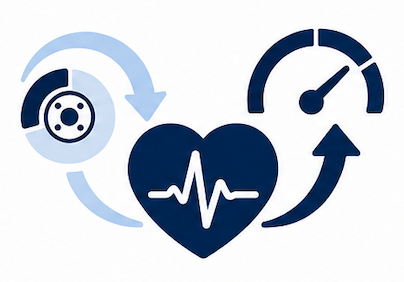
Autonomic Nervous System
Parasympathetic activity applies the break. Sympathetic activity provides acceleration. Together, they continuously adjust the heart to changing demand
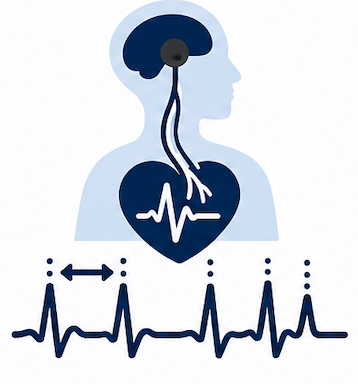
HRV = Heart Rate Variability
Shows how flexible the body adapts and recovers. It reflects cardiac parasympathetic regulation.
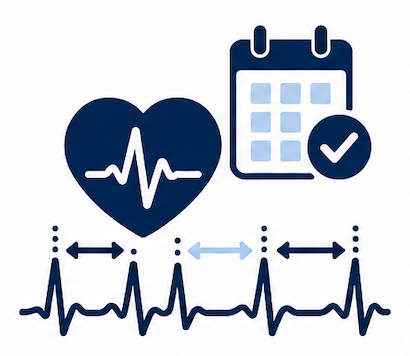
RMSSD
A practical measure for daily HRV monitoring
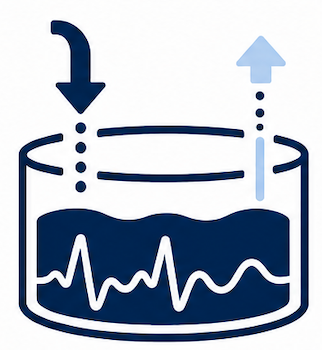
Vagal Tank
Rest, reactivity and recovery reveal your regulatory resources.
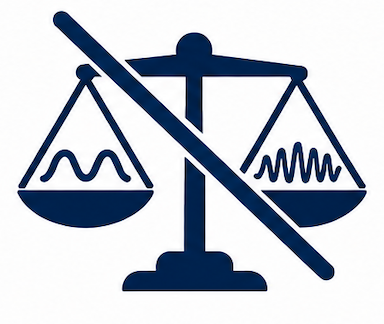
HRV Myths
HRV is not a direct stress measure, it reflects physiological regulation
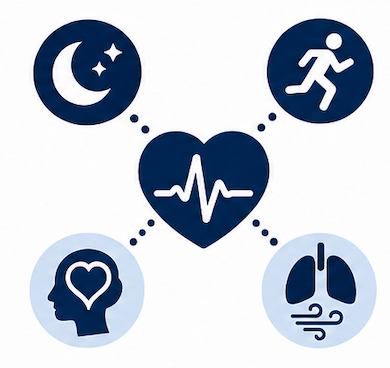
HRV Interpretation
HRV never tells a story on its own - interpret it alongside sleep, training load, health, mood, breathing, medication and individual trends